Key takeaways
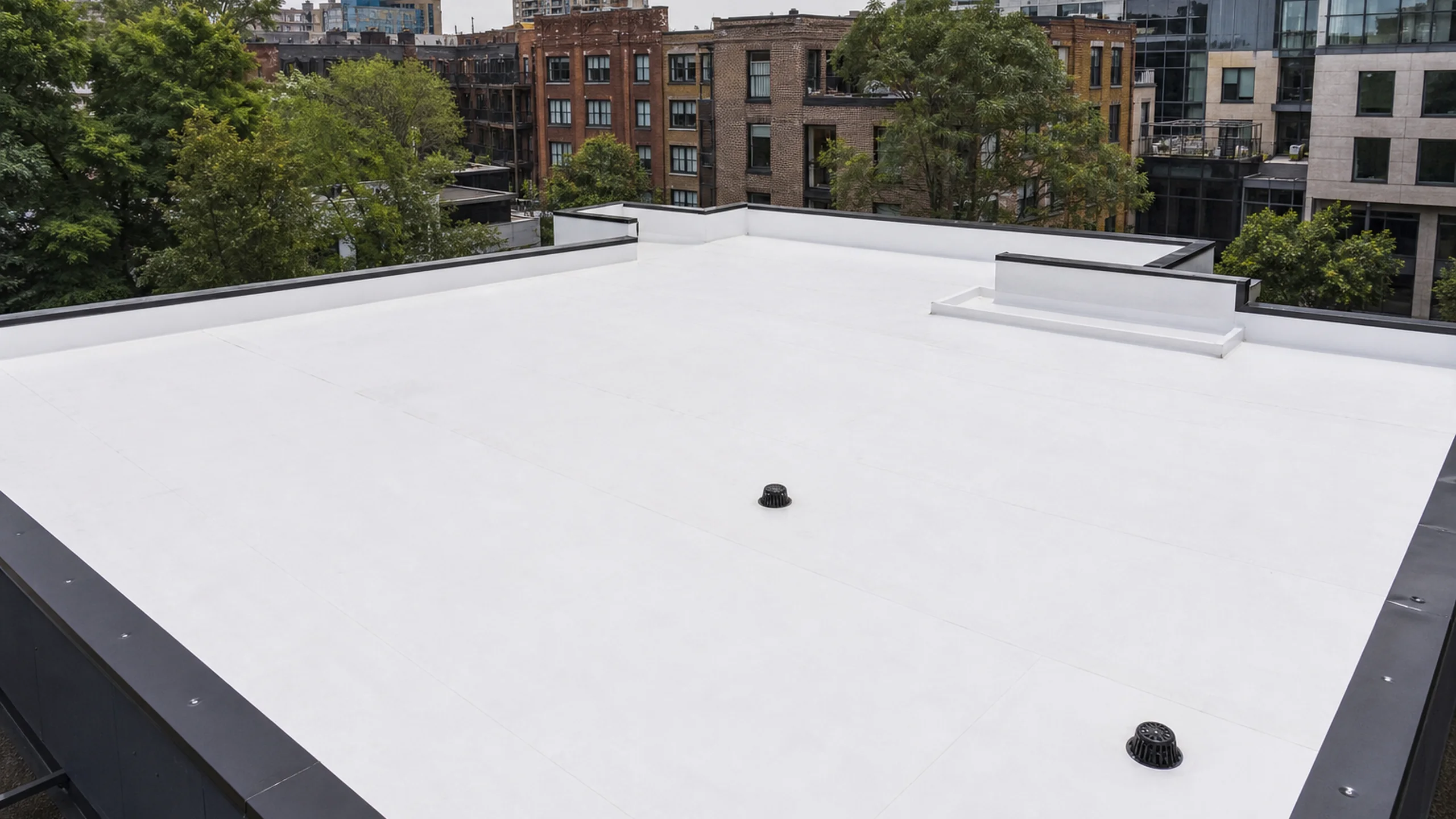
- A commercial flat roof in midtown Toronto with chronic ponding water and two failed patch jobs.
- We pulled the existing membrane, re-sloped the roof with tapered insulation, replaced rotted decking, and installed two new internal roof drains.
- Finished surface: 60 mil fully-adhered TPO with mechanically fastened perimeters.
- The whole install happened with the building fully occupied — staged in three zones over eight working days.
- The owner had spent ~$11k on patches in three years that didn't address the actual drainage problem.
The symptom: standing water
The building manager called us because tenants on the top floor were reporting drips after every heavy rain. From the street it was a typical midtown midrise — flat roof, brick parapet, no visible issue. From the roof it told a different story.
Water was sitting two to three centimetres deep across nearly a quarter of the roof area, twenty-four hours after the last rain. Two drains were partially blocked, but more importantly the deck itself had settled away from the drains at some point in its life. The roof was draining toward a low spot in the middle.
Ponding water on a single-ply membrane is the slow-motion version of failure: the membrane survives it for years, but seams degrade, UV exposure on submerged areas accelerates, and the weight load on the deck is a structural concern in heavy rain.
Why two previous patches failed
Two contractors had been called in before us. Both did the same thing: pulled a small area of membrane, applied liquid patch material, and called it done. Total invoiced: just over $11,000.
The problem with that approach on this roof: the leak wasn't where the patches went. Water entered through a degraded seam in the ponding zone, then tracked under the membrane on the slope toward a penetration almost ten metres away. The patches sealed dry areas. The actual water entry stayed wet.
| What was tried | What it fixed | What it missed |
|---|---|---|
| Liquid-applied patch at visible stain | The dry spot above the tenant's ceiling | The actual water entry point |
| Caulking around vent stack | Cosmetic improvement | The under-membrane water travel path |
| Adding gravel ballast to ponding area | Nothing | Compounded the drainage failure by adding weight |
Scope: tear-off, re-slope, drain
There was no fix short of pulling the membrane and addressing the slope. The full scope:
- Complete membrane removal to the deck across the entire 6,400 sq ft area
- Decking inspection and replacement — 14 sheets of saturated OSB swapped for new
- Tapered polyisocyanurate insulation layered to create a positive slope of 1/4 inch per foot toward the drains
- Two new internal roof drains added at the worst ponding zones (existing drains relocated where needed)
- 60 mil TPO membrane, fully-adhered field, mechanically fastened perimeter
- New parapet flashing, all penetration boots replaced, new walk pads to mechanical equipment
TPO vs. EPDM vs. modified bitumen
We specced TPO on this project deliberately. The owner asked why — here's how we framed the three common flat-roof options for a building of this size and use:
| Membrane | Lifespan | Best for | Watch-outs |
|---|---|---|---|
| TPO (thermoplastic) | 20-25 years | Reflective surface, single-ply, weldable seams | Quality varies wildly by manufacturer — spec by name |
| EPDM (rubber) | 25-30 years | Durability, simple repairs, big open roofs | Black surface absorbs heat — adds to cooling load |
| Modified bitumen | 15-20 years | Cost-sensitive, redundancy via layers | Asphalt-based — more failure modes over time |
For this midtown property — flat, lots of HVAC penetrations, needs to stay reflective to keep cooling costs sane — TPO was the right call. EPDM would have lasted longer but cost the owner more on AC bills every summer.
Sequencing around an occupied building
The tenants stayed open the whole time. That meant a few non-negotiables:
- 01
Three-zone sequencing. We split the roof into thirds and finished each zone fully watertight before moving to the next, so the building was always covered.
- 02
Daily tie-ins. Every workday ended with a watertight perimeter on the active zone — no exceptions, even if it meant working an extra hour.
- 03
Material staging off-site. Insulation and membrane rolls were craned to the roof in measured daily loads, not stockpiled, so wind events didn't create a debris risk.
- 04
HVAC coordination. Two rooftop units were shut down for two-hour windows during membrane work around them, coordinated with building management.
Outcomes and what the owner saved
Project finished in eight working days. Six months later: zero ponding water, zero tenant complaints, drains pulling cleanly.
The owner had been on track to patch this roof every year or two indefinitely at $4-6k per round. The TPO replacement carries a 20-year manufacturer warranty and Blue Knight workmanship warranty. The math, even before counting tenant satisfaction, was already favouring full replacement after the third patch — and the building had two patches already on the books.
Documentation handed over at close:
- Roof plan with drain locations and slope diagram
- Manufacturer warranty paperwork (registered in the owner's name)
- Full photo set of decking, insulation, membrane laps, and flashing
- Maintenance schedule (annual debris removal, biannual visual inspection)
Filed under
Blue Knight Roofing
Building-envelope specialists across the GTA since 1999.