
Thermal Roof Inspection Toronto
What you see is rarely what's leaking.
Infrared thermal imaging reveals moisture infiltration, heat loss, and insulation failure invisible to the naked eye, before they become visible damage.
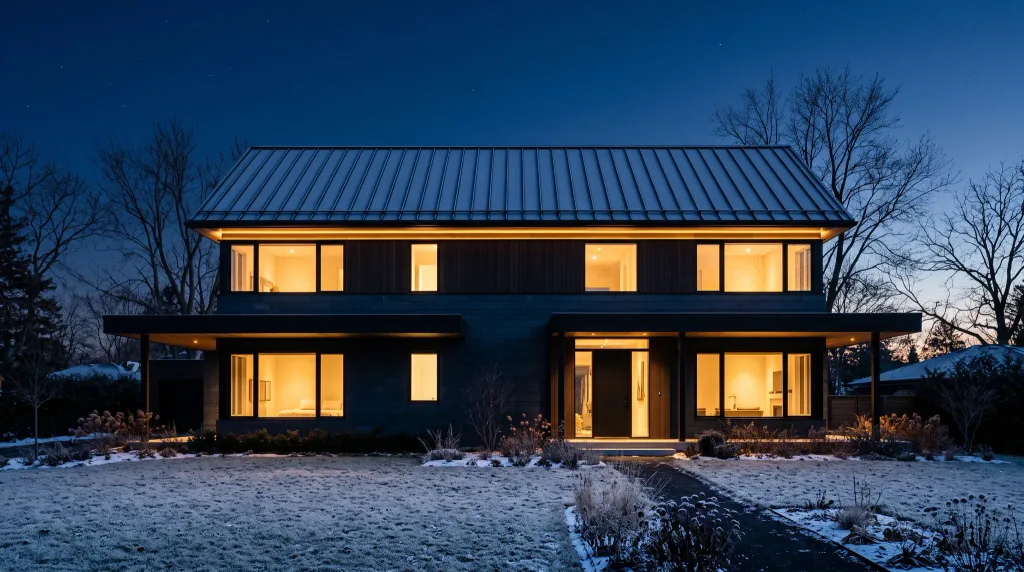
Thermal imaging inspections we conduct across the GTA.
Infrared cameras reveal moisture infiltration, insulation failure, and heat loss invisible to the naked eye.
Moisture Infiltration Mapping
Flat Roof Membrane Survey
Heat Loss Assessment
Post-Storm Moisture Mapping
Attic Thermal Survey
Building Envelope Thermal Survey
Moisture Infiltration Mapping
Invisible water detection
Thermal cameras detect the temperature differential created by wet insulation, finding moisture before it reaches the ceiling below.
Flat Roof Membrane Survey
Commercial thermal scan
Wet insulation under flat roof membranes retains heat differently than dry material, thermal imaging maps the entire moisture field in a single survey.
Heat Loss Assessment
Energy efficiency audit
Thermal imaging of roof assemblies identifies thermal bridging, missing insulation, and air leakage paths that drive heating costs.
Post-Storm Moisture Mapping
Storm damage documentation
After a storm or active leak event, thermal imaging documents the full extent of moisture infiltration for insurance and repair scoping.
Attic Thermal Survey
Interior heat mapping
Interior thermal surveys of attic spaces reveal insulation gaps, ventilation failures, and moisture accumulation before structural damage occurs.
Building Envelope Thermal Survey
Full perimeter scan
Wall-to-roof junction surveys identify building envelope failures that most visual inspections miss, including window frame condensation and parapet moisture.
Water getting in but you can't find where? Thermal imaging finds it before the damage spreads.
Why Blue Knight thermal scans find what eyes can't.
FLIR-certified thermographers
Identifies moisture before damage
Optimal survey conditions
Flat roof moisture specialists
Written thermal report
FLIR-certified thermographers
We use FLIR certified cameras and trained thermographers, not general contractors with a consumer thermal camera.
Identifies moisture before damage
Wet insulation under a flat roof can go undiscovered for years until deck damage or mould appear. Thermal imaging finds it early.
Optimal survey conditions
Thermal surveys require specific temperature differentials to work. We schedule at sunrise or sunset, not midday, for reliable results.
Flat roof moisture specialists
Thermal imaging is most valuable on flat roofs with buried insulation, our primary inspection target in the GTA.
Written thermal report
Every thermal survey delivers annotated thermal images, a moisture extent map, and recommended repair scope with quantified wet area.
“Thermal imaging doesn't find the leak, it finds the water that already got through. That's the real damage.”
“Thermal imaging doesn't find the leak, it finds the water that already got through. That's the real damage.”
Rated 5 out of 5Blue Knight was, by far, the best. Responsive, ethical, totally professional — and their crew went above and beyond at no extra charge.
Rated 5 out of 5They installed a full new roof in one day. The crew worked around the house without us hardly knowing they were there.
Rated 5 out of 5I emailed at 4 a.m. and spoke with someone that same day. Estimate and completed work all within one day. Pricing was fair, work was excellent.
I emailed at 4 a.m. and spoke with someone that same day. Estimate and completed work all within one day. Pricing was fair, work was excellent.
Blue Knight was, by far, the best. Responsive, ethical, totally professional — and their crew went above and beyond at no extra charge.
They installed a full new roof in one day. The crew worked around the house without us hardly knowing they were there.
Luciano did not try to sell me a new roof. Appreciated the honesty — he showed up when he said he would.
We had a leak diagnosed by two other contractors who could not find the source. Blue Knight found it on the first visit and fixed it the same week.
Flat roof replacement on a commercial unit. Clean, fast, no surprises on the invoice. The crew left the site cleaner than they found it.
Called after a storm damaged our roof. Someone was on site within hours, tarped everything, and had us fully repaired before the next rain.
Had a slow basement leak for years. Every other company just caulked it. Blue Knight found the actual source and did a proper waterproofing job. No issues since.
Our neighbours recommended them for a valley repair. Small job, but they treated it like it mattered — showed up on time, matched the shingles perfectly, and charged exactly what they quoted.
Our Work.
Rooftops across the GTA.
From downtown Toronto to the 905 and beyond, one crew, one warranty, twenty-five years of GTA rooflines.
Service availability may vary. Call (647) 383-8664 to confirm coverage for your area.
Rooftops across the GTA.
From downtown Toronto to the 905 and beyond, one crew, one warranty, twenty-five years of GTA rooflines.
Service availability may vary. Call (647) 383-8664 to confirm coverage for your area.
Thermal imaging questions.
Residential thermal inspection: $600-$1,000. Commercial flat roof thermal survey under 10,000 sq ft: $900-$2,000. The cost is typically justified when the alternative is full roof replacement based on visual assessment, thermal imaging frequently reveals that only a portion of the roof requires repair.
At sunrise or shortly after sunset, when the temperature differential between wet and dry insulation is at maximum. Midday solar loading masks moisture signatures. In Toronto's climate, spring and fall produce the optimal temperature differential for accurate thermal surveys.
Thermal imaging finds water that has already entered the roof assembly and been absorbed by insulation, it identifies the moisture field, not the entry point. It is most effective on flat roofs with rigid insulation where wet insulation creates a reliable temperature contrast.
They are complementary methods. Thermal imaging surveys the entire roof surface efficiently and maps the extent of moisture infiltration. Moisture probing confirms findings at specific locations with quantitative readings. For comprehensive flat roof moisture assessment, we use thermal imaging to define the scope and targeted probing to verify and quantify.
Annotated thermal images of the full inspection area with wet zones identified and marked, a moisture extent map overlaid on the roof plan, written summary of findings with severity assessment, estimated wet insulation area as a percentage of total, and recommended repair scope with priority.
What GTA Property Owners Ask About Thermal Roof Inspections.
From how thermal imaging works to when to schedule, answered by 25-year GTA roofing specialists.
A thermal (infrared) camera detects surface temperature variations across the roof. Wet insulation retains solar heat longer than dry insulation, after sunset, wet zones remain warmer than dry zones, creating a detectable temperature differential. The camera maps these temperature variations, which our thermographers interpret to identify moisture infiltration patterns.
A minimum of 5-8°C differential between ambient temperature and the roof surface is typically required. In Toronto, this is most reliably achieved at sunrise (when the surface is cooler than the air) or in the 2-3 hours after sunset (when solar-heated wet insulation is warmer than dry zones and ambient air). We assess conditions before scheduling to confirm a productive survey is achievable.
Thermal imaging is most effective on flat roofs with rigid insulation (common on GTA commercial and multi-unit residential buildings). On sloped residential roofs, it is useful for detecting moisture in insulated attic assemblies from the interior. It is less effective on inverted (protected) membrane assemblies where the insulation is above the membrane.
Residential thermal inspection: $600-$1,000. Commercial flat roof thermal survey under 10,000 sq ft: $900-$2,000. The cost is typically justified when the alternative is full roof replacement based on visual assessment, thermal imaging frequently reveals that only a portion of the roof requires repair, saving significantly more than the inspection cost.
- How does thermal roof inspection work?
- A thermal (infrared) camera detects surface temperature variations across the roof. Wet insulation retains solar heat longer than dry insulation, after sunset, wet zones remain warmer than dry zones, creating a detectable temperature differential. The camera maps these temperature variations, which our thermographers interpret to identify moisture infiltration patterns.
- What temperature differential is needed for thermal roof inspection?
- A minimum of 5-8°C differential between ambient temperature and the roof surface is typically required. In Toronto, this is most reliably achieved at sunrise (when the surface is cooler than the air) or in the 2-3 hours after sunset (when solar-heated wet insulation is warmer than dry zones and ambient air). We assess conditions before scheduling to confirm a productive survey is achievable.
- Can thermal imaging find moisture in all types of roofs?
- Thermal imaging is most effective on flat roofs with rigid insulation (common on GTA commercial and multi-unit residential buildings). On sloped residential roofs, it is useful for detecting moisture in insulated attic assemblies from the interior. It is less effective on inverted (protected) membrane assemblies where the insulation is above the membrane.
- How much does thermal roof inspection cost in Toronto?
- Residential thermal inspection: $600-$1,000. Commercial flat roof thermal survey under 10,000 sq ft: $900-$2,000. The cost is typically justified when the alternative is full roof replacement based on visual assessment, thermal imaging frequently reveals that only a portion of the roof requires repair, saving significantly more than the inspection cost.
- Does insurance cover thermal roof inspection in Ontario?
- The inspection itself is not typically an insured cost. However, for commercial properties, thermal inspection is often expensed as a maintenance or capital assessment cost. The reports produced by thermal inspection support insurance claims by documenting the extent of moisture damage attributable to a covered event.
- Is thermal imaging worth it for a residential roof in Toronto?
- For sloped residential roofs, thermal imaging is less commonly used, visual inspection and moisture probing are typically more cost-effective. For residential flat roof additions, garages, and condominiums, thermal imaging adds significant value by mapping hidden moisture that visual inspection cannot detect. The break-even point is roughly $2,000-$3,000 in potential repair scope.
- How accurate is thermal imaging for detecting roof moisture?
- Under optimal conditions (correct temperature differential, appropriate roof type), thermal imaging by a certified thermographer is highly accurate for identifying moisture zones. It is not quantitative, it maps wet vs. dry areas rather than measuring moisture content in percentage. For quantitative measurement, thermal imaging is combined with capacitance probing or nuclear scanning.
- Can thermal imaging detect moisture under a flat roof membrane?
- Yes, provided the moisture has penetrated into the insulation layer beneath the membrane. Thermal imaging detects the temperature difference between wet and dry insulation, which occurs beneath the membrane surface. It does not detect moisture trapped in a thin layer at the membrane surface or in standing water above the membrane.
- What is the difference between thermal imaging and nuclear moisture scanning?
- Thermal imaging identifies wet insulation by temperature differential, it is fast, covers large areas, and is non-contact. Nuclear moisture scanning measures hydrogen atom concentration in the substrate, it is slower, point-by-point, and produces quantitative readings. Thermal imaging is used for rapid survey and mapping; nuclear scanning is used for verification and quantification of specific zones identified by thermal.
- Is thermal imaging useful for Toronto commercial flat roofs?
- Yes, it is the most efficient method for moisture assessment of large commercial flat roofs. Toronto's significant stock of 1960s-1990s commercial flat roofs with built-up and modified bitumen systems, many of which have never had a systematic moisture assessment, benefits significantly from thermal surveys. A thermal survey on a 50,000 sq ft roof can be completed in a few hours.
- How often should a commercial flat roof in Toronto be thermally inspected?
- Every 3-5 years for roofs under 15 years of age; annually for roofs over 15 years. A baseline thermal survey at installation, followed by periodic re-surveys, allows moisture ingress to be identified and repaired before it expands across the insulation field.
- Can thermal inspection determine if a flat roof needs to be replaced?
- Thermal inspection quantifies the percentage of wet insulation across the roof surface. A general guideline: under 20% wet area, targeted repair; 20-40%, partial section replacement or phased repair program; over 40%, full replacement is typically more cost-effective than piecemeal repair. We provide this analysis in our thermal inspection reports.
- Can thermal inspection be used for warranty disputes on Toronto flat roofs?
- Yes. A thermal inspection within the warranty period of a new flat roof documents any moisture infiltration before the warranty expires. If moisture is found, the report provides the evidence base for a warranty claim. We recommend a thermal survey 12-18 months after installation on commercial flat roofs to verify the new system is watertight before the warranty period ends.
- When should I schedule thermal roof inspection in Toronto?
- Spring (April-May) and fall (September-October) are optimal in Toronto, overnight temperatures drop significantly from daytime highs, creating the temperature differential that makes thermal surveys accurate. Surveys are conducted at sunrise or 1-2 hours after sunset. We avoid midsummer surveys when overnight temperatures remain too high for reliable temperature contrast.
- Can thermal roof inspection be done in winter in Toronto?
- In winter, Toronto frequently achieves the required temperature differential, particularly during clear cold nights following sunny days. The challenge is snow cover, which insulates the roof surface and masks moisture signatures. We schedule around snow-free periods. Post-snowmelt surveys (late March to early April) often produce excellent conditions.
- How quickly can a thermal roof inspection be scheduled in Toronto?
- Most inspections are scheduled within 1-2 weeks. Time-sensitive situations, post-storm insurance documentation, lease transitions, or purchase deadlines, can be expedited. We assess weather conditions in advance of the booking and will reschedule if the temperature differential forecast is insufficient for a productive survey.
More ways Blue Knight can help.
Drone Inspections
Learn more InspectionsMoisture Detection
Learn more InspectionsInsurance Reports
Learn moreReady to schedule your estimate?
We come to you, assess the roof, and give you a written quote. You are not obliged to proceed. Most estimates completed same week.