
Toronto waterproofing, from the foundation up.
Most water problems on a building are not roofing problems. Balconies, foundations, parking slabs, and the joints between them carry the failures we find most.
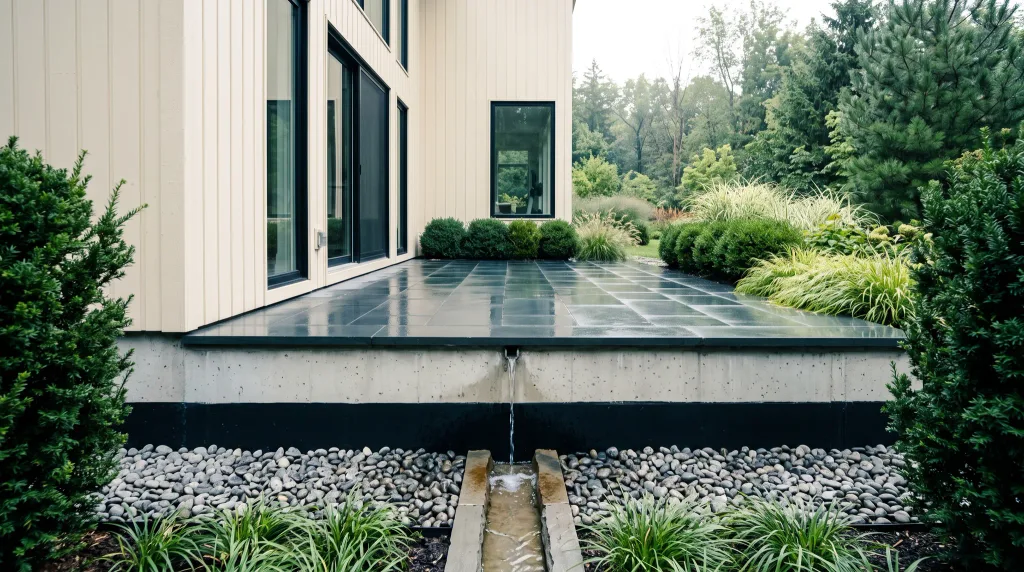
Most water problems on a building are not roofing problems. Basements, balconies, foundations, parking slabs, and the joints between them carry the failures we are called to most often, and they behave differently from anything above the roofline.
Below grade especially, the question that decides the repair is where the water is arriving from. Groundwater under hydrostatic pressure, surface water from grading and downspouts, and a plumbing failure all produce a similar stain on a basement wall and need entirely different work. Getting that wrong is how people pay for a full system when they needed a drain.
Basement waterproofing, interior and exterior
Basement waterproofing is the largest part of what we do below grade, and it splits into two approaches that solve different problems. Exterior work excavates to the footing, waterproofs the wall, and relieves the pressure with new drainage. It stops water at the wall and it is the more complete answer where groundwater is the cause. Interior systems manage water that has already entered, at lower cost and far less disruption to landscaping and driveways.
Neither is better in the abstract. On a heritage foundation of stone, rubble, or early brick, aggressive exterior excavation can be genuinely unsafe, because the soil bearing against the wall is part of what holds it up. Where exterior work is right on a wall of that age it is done in short sections backfilled before the next is opened, which costs more and takes longer. Our full detail on the approach is on the basement waterproofing page.
Above grade: balconies, terraces, and parking decks
A balcony is a roof over whatever sits beneath it, and it is usually the ceiling of the unit below. When a balcony membrane fails, the complaint arrives from a different owner than the one whose slab is leaking, which is why these turn into disputes as often as repairs.
Parking structures are the same problem at scale. Traffic-bearing membranes wear, expansion joints fail, and salt carried in on vehicles through a GTA winter accelerates everything. On a condo the work has to be justified to a board before it can be approved, so our reports come formatted for reserve fund studies rather than as a quote.
What it costs and how we scope it
Interior systems run $100 to $250 per linear foot. Exterior excavation and membrane runs $250 to $450 per linear foot. A single crack injection runs $500 to $1,500. Most properties do not need the full perimeter treated, and a quote that assumes they do is a quote written before anyone looked.
So the written scope follows an inspection that covers the interior evidence, the exterior grading and downspout discharge, and the window wells. Those three together explain most of what we are called about, and window wells in particular are the most commonly missed entry point and among the cheapest to put right.
How much does basement waterproofing cost in Toronto?
Interior systems run $100 to $250 per linear foot and exterior excavation with membrane runs $250 to $450 per linear foot. A single crack injection starts around $400. The written quote follows the inspection and covers only the sections the diagnosis supports, which on most properties is well short of the full perimeter.
Is interior or exterior basement waterproofing better?
They solve different problems. Exterior work stops water at the wall and relieves the pressure driving it, which is the more complete answer where groundwater is the cause. Interior systems manage water that has already entered, at lower cost and much less disruption. We tell you which failure mode you actually have and price both where both are genuinely viable.
My builder said the foundation was waterproofed. Why is it leaking?
It was almost certainly damp-proofed rather than waterproofed. The sprayed coating used on subdivision foundations resists soil moisture but not water under hydrostatic pressure, and it has a service life that the 1990s and 2000s builds are now reaching together. On the clay through Peel and York that distinction is the single most common reason a twenty year old basement starts leaking.
Do you waterproof balconies and parking garages?
Yes. Balcony and terrace membranes, traffic-bearing parking deck systems, and expansion joints are a substantial part of our below-grade and above-grade work across condo and commercial buildings. Reports are written in a format a property manager can put straight into a reserve fund file.
How long does the work take?
Interior crack injection is usually a few hours and an interior perimeter system one to two days. Exterior excavation on a residential foundation runs three to five days depending on access and what the dig encounters. Heritage walls done in sections take longer, and we say so before starting rather than partway through.
Will a sump pump fix a wet basement on its own?
Only if the water is already being collected and simply not ejected fast enough. A sump manages water that reaches the pit through weeping tile. If water is entering through a crack in the wall above the slab, a bigger pump does nothing about it. We check what the existing system is actually doing before recommending anything.
What should I look for in a waterproofing company in Toronto?
A diagnosis before a price. The company should tell you in writing where the water is coming from and why before proposing a system, and should be able to explain the difference between damp-proofing and waterproofing on your foundation. Be wary of any quote that treats the full perimeter by default, and ask for the warranty in writing before work starts.
Seeing a stain on a basement wall or a wet balcony?