The short answer: find the entry point before you pick a fix
A leaky basement is a symptom, not a diagnosis. Water reaches a basement in a handful of very different ways, and the fix that works for one of them does nothing for another. The expensive mistakes we see follow the same pattern: a full perimeter system sold to a house where the water was coming through one window well, or a sealer painted on the inside of a wall that has water pressure building behind it.
So the order matters. First establish where the water is getting in and why, then choose between interior waterproofing, exterior waterproofing, or a smaller targeted repair. This guide walks through that order the way we do it on a site visit: the entry points ranked by how often we find them, the impostors that look like leaks but are not, what interior and exterior basement waterproofing each actually do, and how to tell when the real problem is a crack, a sump or the drainage.
If you already know what you need and want numbers, our basement waterproofing cost guide covers what each method costs across the GTA.
Where basement water actually gets in, ranked
This is roughly the order we find them in on GTA houses, most common first:
| Entry point | How it presents | Typical fix |
|---|---|---|
| Window wells | Water on the floor under a basement window, or a stain running down the wall below the frame, during heavy rain | Clear or add the well drain, fit a cover, correct the grading around it |
| Grading and downspouts | Leaks along one wall after heavy rain, worst where a downspout empties beside the foundation | Extend the downspouts, regrade the soil so it falls away from the house |
| Foundation wall cracks | A damp line or an active drip following a crack, usually vertical or diagonal | Crack injection from inside, or exterior repair where the wall is finished |
| The wall to floor joint | Water appearing at the base of the walls, often on several sides and often in spring | Relieve the pressure with interior drainage to a sump, or exterior drainage |
| Failed or clogged weeping tile | Seepage low on the walls, wet slab edges, white efflorescence on the concrete | Interior drain tile, or exterior weeping tile replacement |
| Pressure through the slab | Water coming up through floor cracks or around the floor drain when the water table is high | Sub-slab drainage and a sump pump |
Two things stand out in that list. The first two are cheap to fix and are behind a large share of the basement water leak calls we take. And the more serious causes, weeping tile and hydrostatic pressure, show up as water low on the wall or at the floor rather than high up at a crack. Where the water appears on the wall is itself evidence.
When a wet basement is not a leak at all
A meaningful share of wet basements have no leak in them. Ruling these out first saves people from paying for waterproofing that fixes nothing:
- Condensation. Humid summer air meets a cold concrete wall and the moisture condenses on the surface, so the wall looks like it is seeping. A simple test: tape a square of plastic sheet tightly to the wall for a day or two. Moisture on the room side of the plastic is condensation, and the fix is a dehumidifier and air sealing. Moisture underneath it is coming through the wall.
- Sewer backup. Water that rises out of the floor drain during a storm, often dirty, is the municipal sewer surcharging, not groundwater. It is a plumbing problem with a plumbing fix, usually a backwater valve.
- Plumbing leaks. A supply line, a water heater or a laundry connection. The giveaway is that it correlates with water use rather than with the weather.
Interior basement waterproofing: what it does and what it does not
Interior basement waterproofing manages water that has already reached the foundation. The usual system cuts a channel around the inside perimeter of the slab, lays drain tile in a gravel bed, fits a dimpled membrane against the wall to direct any seepage down into the channel, and carries the water to a sump pit where a pump sends it outside. Sealing an individual crack from inside by injection is also interior work, and on a single leaking crack it is often all that is needed.
What interior waterproofing does well:
- Far less disruption. Nothing outside is dug up, so driveways, decks, walkways and landscaping stay where they are.
- It works in any season, because the work happens indoors.
- Lower cost than excavating the same length of wall.
What it does not do is stop water reaching the wall. The outside of the foundation stays wet, and the system works by collecting that water and removing it before it reaches the living space. For most leaky basements that is a perfectly good answer. Where water pressure is severe, or the wall itself is deteriorating from constant saturation, it is not the complete one.
A word on waterproofing inside the basement with paint-on sealers. A masonry sealer or waterproofing paint on the room side of a wall can reduce dampness from very minor seepage, but under real water pressure it blisters and peels, because the water is pushing it off the wall from behind. It is a cosmetic fix for a damp wall, not basement sealing and waterproofing in any structural sense.
Exterior basement waterproofing: when digging is the right answer
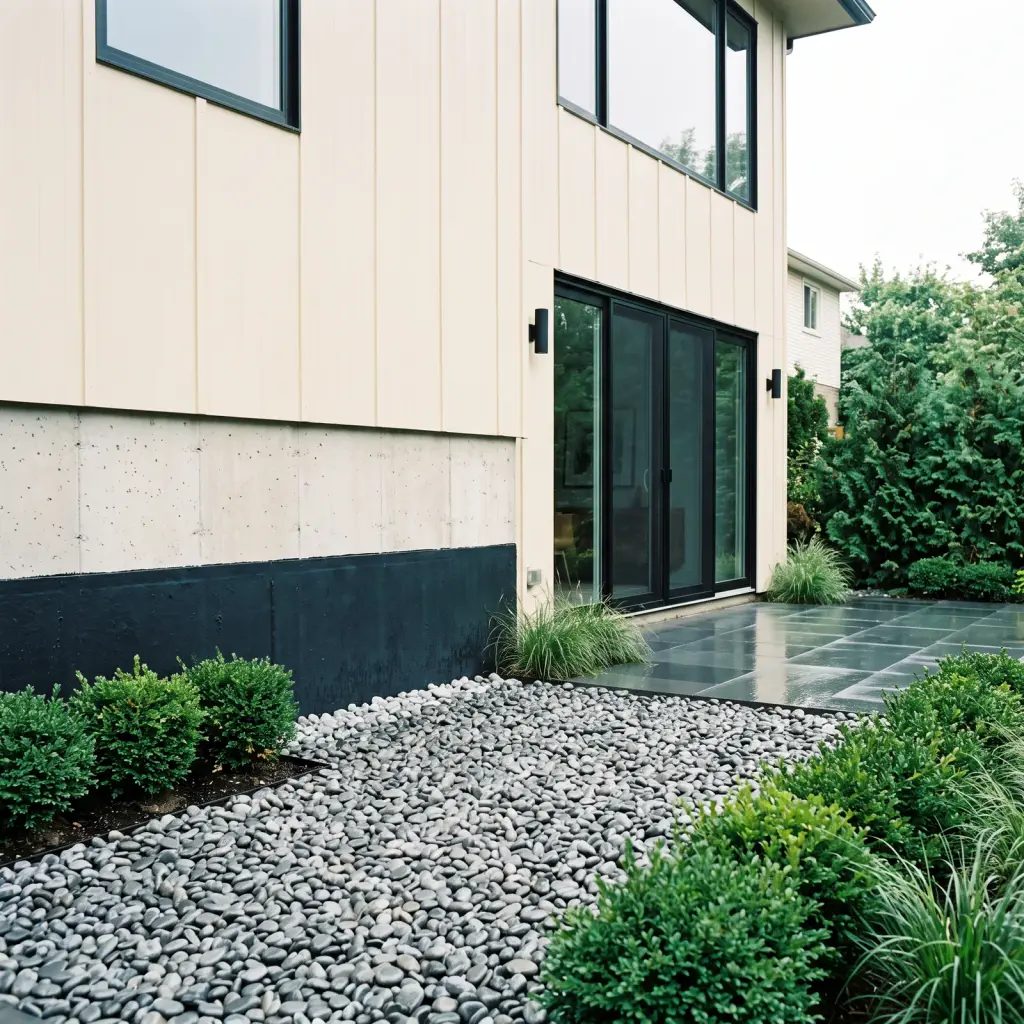
Exterior basement waterproofing works from the outside in. The wall is excavated down to the footing, cleaned, and covered with a true waterproofing membrane. A drainage board goes over the membrane, new weeping tile is laid at the footing, and the trench is backfilled with free-draining stone. Waterproofing the basement from outside this way stops water at the wall and relieves the pressure that was driving it in, which makes it the more complete answer where groundwater is the cause.
It is also the answer to a very common GTA problem. Most subdivision foundations built through the 1990s and 2000s were damp-proofed, not waterproofed. The sprayed coating resists soil moisture but not water under pressure, and it has a service life that those houses are now reaching together. When that coating fails along a whole wall, external basement waterproofing replaces it with something that was designed to hold back water.
The costs of the approach are real and worth stating plainly: walkways, decks and gardens along the wall come up, the work is weather-limited, and it costs more per foot than interior work. On a heritage foundation of stone, rubble or early brick, there is a structural caution as well. The soil bearing against an old wall is part of what holds it up, so exterior work on a wall of that age is done in short sections that are backfilled before the next is opened. It takes longer, and it is the only safe way to do it.
Interior or exterior: how to choose
Neither method is better in the abstract. They solve different problems, and the situation usually points clearly at one:
| Situation | Usually points to |
|---|---|
| Water at one crack in a finished basement | Crack injection from inside |
| Water at the wall to floor joint on several walls, with a driveway or deck along the house | Interior drainage and a sump pump |
| Repeated leaks through failed damp-proofing, wall accessible from outside | Exterior membrane and new weeping tile |
| Stone, rubble or early brick foundation | Interior management, or exterior in short sections after the wall is assessed |
| Water only in storms, at the corner where a downspout empties | Fix the downspout and grading first |
Where both are genuinely viable we price both and explain the trade-off, rather than steering toward whichever is the bigger job. The deciding question is always the same: is the water arriving under pressure through the wall and footing, or is it arriving at a few specific points that can be fixed on their own?
When it is really a crack, a sump or a drainage problem
Three of the entry points above have their own fixes, and each has its own page:
- Cracks. A vertical or diagonal shrinkage crack in a poured wall is usually sealed by injection: polyurethane where the aim is to stop water, epoxy where the crack also needs structural bonding. Horizontal cracks and stair-step cracking in block walls are different, because they indicate the wall is moving, and they need a structural assessment before anyone injects them. More on foundation crack repair.
- The sump. If a pit exists but the basement still floods, the pump may be undersized, failing, or losing power in the same storm that fills the pit. A battery backup is what covers that last case. More on sump pump installation.
- Drainage. Weeping tile that has silted up, collapsed, or been cut off from its outlet stops relieving the pressure around the footing, and the water finds the wall to floor joint instead. Many older GTA homes still have their original clay tile. More on weeping tile and drainage.
Why GTA basements leak: clay, moraine and the spring melt
Local soil explains a lot of what we find. Across much of Toronto, Peel and York the ground is clay till, which drains slowly and holds water against a foundation for days after rain. The spring melt saturates it at the same time as the heaviest rain of the year, which is why so many wet basement repair calls come in March and April. Around newer houses the backfill settles for years after construction, grading that once sloped away from the wall reverses, and water collects exactly where it does the most harm.
North of the city, on the Oak Ridges Moraine through Richmond Hill, Aurora, Newmarket and King, the soils are sandier and drain quickly, but the water table sits high in places, so the pressure problem arrives from below rather than from the side. Ravine and lakeshore lots have their own version: groundwater closer to the surface and slopes that deliver surface water toward the house.
Our city pages cover what we typically find in each area, including Mississauga, Hamilton, Scarborough, Vaughan, North York and Newmarket.
What to do this week if your basement is leaking
None of this replaces a diagnosis, but all of it helps, and some of it fixes the problem outright:
- 01
Move anything valuable off the floor and run a dehumidifier to keep the moisture from spreading into drywall and flooring.
- 02
Walk the outside of the house in the rain. Watch where the downspouts empty and where water pools. Downspouts should discharge a couple of metres away from the foundation, onto ground that slopes away.
- 03
Clear the window wells. Leaves and debris block the drain at the bottom, and a well that fills becomes a bathtub against the window.
- 04
Photograph the water and note the timing. Where it appears, how long after rain, and in what season. This is exactly the evidence a diagnosis needs.
- 05
Test the sump if you have one. Pour a bucket of water into the pit and confirm the float lifts and the pump runs.
- 06
Get the diagnosis in writing before a quote for a full system. Any contractor should be able to tell you where the water is entering and why before they price a fix.
What a Blue Knight basement assessment covers
When we assess a leaky basement we look at the three places that explain most of what we are called about: the interior evidence, the exterior grading and downspout discharge, and the window wells. Then the sump and the weeping tile where there is access, and the foundation itself, including what it is built from and whether it was damp-proofed or waterproofed.
What you get is a written scope that covers only the sections of wall the diagnosis supports, with the reasoning attached, and a written warranty specific to the system we install, handed over before the work starts. Where the honest answer is a downspout extension and a window well cover, that is what the report says. More on our basement waterproofing service.
Filed under
Blue Knight Roofing
Building-envelope specialists across the GTA since 1999.