
Basement Waterproofing in Burlington
Runoff off the escarpment above, a high water table near the lake below. Burlington basements leak for opposite reasons depending on where they sit, and the repair is not the same.
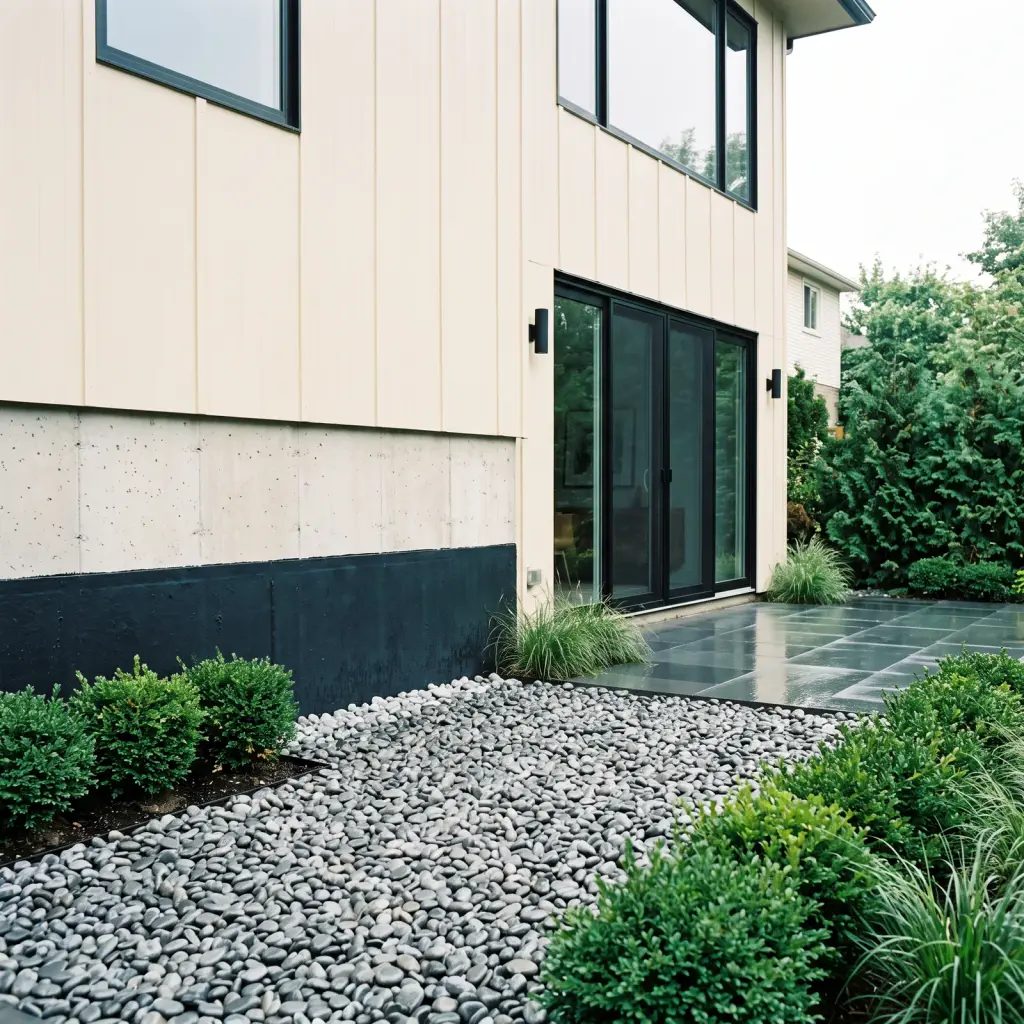
Basement Waterproofing in Burlington, what we fix.
Basement leaks
Below-grade waterproofing
Sump pump installation
Balcony leaks
Terrace leaks
Underground parking waterproofing
Why our waterproofing actually holds.
Diagnose first
System-matched materials
Written warranties
Full documentation
Interior & exterior
Parking structure expertise
Diagnose first
We identify the actual entry point and failure mode before recommending a waterproofing system. The right system depends on the diagnosis.
System-matched materials
We specify and install waterproofing systems appropriate to the failure mode, not a one-size coating over everything.
Written warranties
Our waterproofing warranties are written, clearly explained before work begins, and transferable to future property owners.
Full documentation
Written inspection reports and completion documentation suitable for insurance, lenders, and reserve fund files.
Interior & exterior
We explain interior and exterior waterproofing options honestly, with the trade-offs, and recommend what's appropriate for your situation.
Parking structure expertise
Parking deck waterproofing, joint systems, and traffic membranes, commercial-grade capability applied to residential and commercial buildings.
“The right waterproofing system depends on what's actually failing. We find that out first.”
“The right waterproofing system depends on what's actually failing. We find that out first.”
Rated 5 out of 5Blue Knight was, by far, the best. Responsive, ethical, totally professional — and their crew went above and beyond at no extra charge.
Rated 5 out of 5They installed a full new roof in one day. The crew worked around the house without us hardly knowing they were there.
Rated 5 out of 5I emailed at 4 a.m. and spoke with someone that same day. Estimate and completed work all within one day. Pricing was fair, work was excellent.
Blue Knight was, by far, the best. Responsive, ethical, totally professional — and their crew went above and beyond at no extra charge.
They installed a full new roof in one day. The crew worked around the house without us hardly knowing they were there.
I emailed at 4 a.m. and spoke with someone that same day. Estimate and completed work all within one day. Pricing was fair, work was excellent.
Luciano did not try to sell me a new roof. Appreciated the honesty — he showed up when he said he would.
We had a leak diagnosed by two other contractors who could not find the source. Blue Knight found it on the first visit and fixed it the same week.
Flat roof replacement on a commercial unit. Clean, fast, no surprises on the invoice. The crew left the site cleaner than they found it.
Called after a storm damaged our roof. Someone was on site within hours, tarped everything, and had us fully repaired before the next rain.
Had a slow basement leak for years. Every other company just caulked it. Blue Knight found the actual source and did a proper waterproofing job. No issues since.
Our neighbours recommended them for a valley repair. Small job, but they treated it like it mattered — showed up on time, matched the shingles perfectly, and charged exactly what they quoted.
Our Work.
Rooftops across the GTA.
From downtown Toronto to the 905 and beyond, one crew, one warranty, twenty-five years of GTA rooflines.
Service availability may vary. Call (647) 383-8664 to confirm coverage for your area.
Rooftops across the GTA.
From downtown Toronto to the 905 and beyond, one crew, one warranty, twenty-five years of GTA rooflines.
Service availability may vary. Call (647) 383-8664 to confirm coverage for your area.
Basement Waterproofing questions for Burlington.
By the length of wall treated. An interior drainage system runs $100 to $250 per foot of wall, excavating and membraning the outside runs $250 to $450 per foot, and injecting a single crack starts around $400. It is rare for a Burlington house to need all four walls treated, and the written quote covers only the stretches where the diagnosis found water coming through.
Very possibly, and it is worth establishing before spending anything on the walls. Brant Hills climbs toward the escarpment, and rain soaking into the lots above yours moves through the soil and presses against whichever wall faces uphill. That side often dries out once regrading, a swale and longer downspout runs send the water around the house, so we walk the lot and the neighbouring grades before we look at the foundation.
It depends on which of Burlington's two water problems you have. On a lower city lot near the lake in Freeman or Aldershot, where groundwater bears on the wall for weeks each spring, an exterior membrane with new weeping tile takes the pressure off at the source. Where the water arrives in bursts from uphill, or the outside is boxed in by a deck, driveway or fence line, an interior system catches it at the footing for less money and leaves the yard alone.
Those need care about method, because many of the prewar and early postwar houses there stand on block or rubble stone walls that lean on the backfill for part of their stability. Opening a whole side at once can let a wall like that move, so where an exterior membrane really is the answer we dig it in short runs and backfill each one before starting the next. The quote shows the extra days and cost openly, since a faster dig on that kind of wall is a risk we will not take.
Yes. The condominium towers downtown and along the lake, and the newer mid-rise buildings on Fairview Street and Plains Road, sit over underground and podium parking whose membranes eventually wear through under traffic and road salt. We repair and replace traffic bearing membranes, rebuild expansion joints and inject slab cracks, and write the findings up in a form a condo board can take into its reserve fund planning.
Usually not. On many of Burlington's 1970s to 90s houses the wells were set with a short drain that has silted up, or no drain at all, so every spring melt fills the well like a bucket against a basement window that was never meant to sit underwater. Clearing or installing a drain down to the weeping tile, with washed stone around it and a cover where roof runoff pours in, usually ends the problem for far less than an interior perimeter system.
On most Burlington homes it means digging down along the affected walls, stripping the original damp proofing, and replacing it with a proper waterproofing membrane backed by drainage board, with the weeping tile at the footing checked and renewed where it has clogged. On the 1990s and 2000s subdivision stock that is often the upgrade the house needed from the start. On older lakeshore foundations the excavation plan has to protect the wall, and sometimes an interior system is the safer answer. The written quote lists which walls are being treated and why.
Yes, wherever a defect in the wall is what admits the water: poured-wall cracks sealed by injection, parging that has fallen away, soft or missing mortar in block and brick, and tie holes or pipe penetrations that weep. A single crack injection starts around $400. Bowing, fresh stepped cracking, or a crack that keeps opening is a structural question, and we put it in writing as one, with a recommendation to have an engineer assess the wall before any sealing or membrane work goes ahead.
By working out where and when the water arrives before choosing a repair. A leak on the uphill wall during a downpour points to surface water and drainage, seepage at the floor edge through spring points to groundwater, and a wet corner under a downspout often has the simplest fix of all. We trace the entry point, photograph it, and quote the repair that addresses it, which on many Burlington homes is a targeted fix rather than a full perimeter system.
Basement waterproofing in Burlington starts with one question: which direction is the water arriving from. In the upper city, water comes downhill. Runoff off the escarpment moves through the soil toward foundations that sit in its path, and the properties that flood are frequently the ones at the bottom of a slope rather than the ones with the oldest foundations.
Near the lake the mechanism reverses. Groundwater sits closer to the surface, and the older housing through Freeman and Burlington Heights was built with damp proofing rather than waterproofing, or in the oldest cases with nothing at all. Those foundations are dealing with sustained pressure from below rather than an intermittent flow from uphill, and a system that manages one does not necessarily manage the other.
Uphill Water and Lakeside Water
Nearly every wet basement we open in Burlington falls on one side of a simple line: is the water coming down from the escarpment side, or up out of the ground near the lake? Water from uphill shows up during a storm or a fast thaw, on the wall facing the higher ground, and is often cured outside with regrading, swales and downspouts carried well away from the house. Water from a high table near the shore arrives slowly through April, seeps in where the wall meets the floor, and needs drainage that genuinely relieves the pressure.
The cost difference between those two answers is several thousand dollars on the same house. Paying for pressure relief on a Brant Hills house that only needed its grading corrected is money spent on the wrong problem, and on an Aldershot house near the water the reverse mistake leaves the water exactly where it was.
What Halton Builders Called Waterproofing
The subdivisions that went up through the 1990s and 2000s in Alton Village, Orchard, and Millcroft received a sprayed damp proofing coating on their foundations. That coating keeps ordinary soil dampness off the concrete. It does not hold back water that is pushing against the wall, and after twenty years or more in Halton clay it has thinned and cracked on many of those houses at about the same time.
So a twenty year old Burlington basement developing its first leak is usually not a defect and usually not neglect. It is a coating reaching the end of what it was specified to do, in a house whose owners were told the foundation was waterproofed. Knowing which of the two your house actually has changes what a sensible repair looks like, and it is the first thing we establish on a Millcroft or Orchard foundation.
Creek Valleys, Clay, and the Shoreline Beneath Burlington
Escarpment runoff does not stay in the upper city. It travels to the lake through a string of creek valleys, Tuck, Shoreacres, and Appleby among them, and houses backing onto those valleys sit lower than their streets and closer to moving groundwater than the lots around them. Between the creeks, much of the middle of the city is built on dense clay that drains slowly, so a wet spring keeps the soil saturated against foundation walls for weeks rather than days.
The shoreline adds its own conditions. Along Lakeshore Road and the older streets just north of it, the water table rises and falls with the season, and the foundations of that era were rarely built with it in mind. A basement near the water can stay dry through a summer storm and seep steadily every April. We note which of these settings a house sits in before opening a wall, because it decides whether the answer is grading, drainage, a membrane, or some combination of the three.
We also cover nearby cities.
Ready to schedule your estimate?
We come to you, assess the roof, and give you a written quote. You are not obliged to proceed. Most estimates completed same week.