
Basement Waterproofing in Downtown Toronto
Underground garage waterproofing for downtown Toronto condo buildings and parking structures, plus wet basements under the older row houses of Corktown and Kensington Market. Failed joints, worn traffic membranes, and corroded drain details are among our most frequent downtown calls.
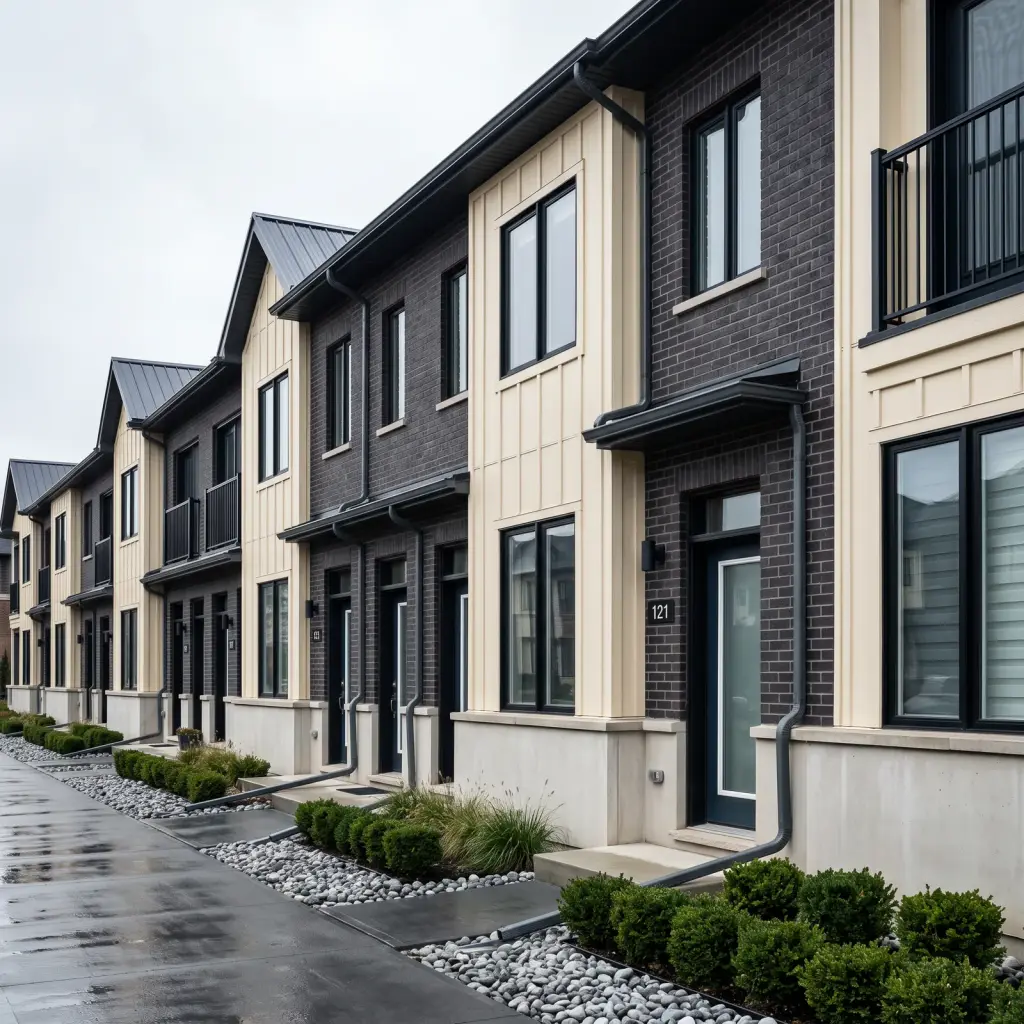
Basement Waterproofing in Downtown Toronto, what we fix.
Basement leaks
Below-grade waterproofing
Sump pump installation
Balcony leaks
Terrace leaks
Underground parking waterproofing
Why our waterproofing actually holds.
Diagnose first
System-matched materials
Written warranties
Full documentation
Interior & exterior
Parking structure expertise
Diagnose first
We identify the actual entry point and failure mode before recommending a waterproofing system. The right system depends on the diagnosis.
System-matched materials
We specify and install waterproofing systems appropriate to the failure mode, not a one-size coating over everything.
Written warranties
Our waterproofing warranties are written, clearly explained before work begins, and transferable to future property owners.
Full documentation
Written inspection reports and completion documentation suitable for insurance, lenders, and reserve fund files.
Interior & exterior
We explain interior and exterior waterproofing options honestly, with the trade-offs, and recommend what's appropriate for your situation.
Parking structure expertise
Parking deck waterproofing, joint systems, and traffic membranes, commercial-grade capability applied to residential and commercial buildings.
“The right waterproofing system depends on what's actually failing. We find that out first.”
“The right waterproofing system depends on what's actually failing. We find that out first.”
Rated 5 out of 5Blue Knight was, by far, the best. Responsive, ethical, totally professional — and their crew went above and beyond at no extra charge.
Rated 5 out of 5They installed a full new roof in one day. The crew worked around the house without us hardly knowing they were there.
Rated 5 out of 5I emailed at 4 a.m. and spoke with someone that same day. Estimate and completed work all within one day. Pricing was fair, work was excellent.
Blue Knight was, by far, the best. Responsive, ethical, totally professional — and their crew went above and beyond at no extra charge.
They installed a full new roof in one day. The crew worked around the house without us hardly knowing they were there.
I emailed at 4 a.m. and spoke with someone that same day. Estimate and completed work all within one day. Pricing was fair, work was excellent.
Luciano did not try to sell me a new roof. Appreciated the honesty — he showed up when he said he would.
We had a leak diagnosed by two other contractors who could not find the source. Blue Knight found it on the first visit and fixed it the same week.
Flat roof replacement on a commercial unit. Clean, fast, no surprises on the invoice. The crew left the site cleaner than they found it.
Called after a storm damaged our roof. Someone was on site within hours, tarped everything, and had us fully repaired before the next rain.
Had a slow basement leak for years. Every other company just caulked it. Blue Knight found the actual source and did a proper waterproofing job. No issues since.
Our neighbours recommended them for a valley repair. Small job, but they treated it like it mattered — showed up on time, matched the shingles perfectly, and charged exactly what they quoted.
Our Work.
Rooftops across the GTA.
From downtown Toronto to the 905 and beyond, one crew, one warranty, twenty-five years of GTA rooflines.
Service availability may vary. Call (647) 383-8664 to confirm coverage for your area.
Rooftops across the GTA.
From downtown Toronto to the 905 and beyond, one crew, one warranty, twenty-five years of GTA rooflines.
Service availability may vary. Call (647) 383-8664 to confirm coverage for your area.
Basement Waterproofing questions for Downtown Toronto.
We phase repairs to maintain partial access throughout the project. Sequencing is planned with building management before work begins.
Yes. Below-grade commercial spaces, utility corridors, and mechanical rooms are within our scope.
Yes, balcony and terrace waterproofing is a significant part of our downtown work.
Yes. Polyurethane and epoxy crack injection is available for heritage and modern foundations.
Yes. We present to boards and provide documentation formatted for board decision-making when required.
It is chloride-induced corrosion of the reinforcing steel, and whether it is structural depends on how far it has progressed. Road salt tracked in by vehicles penetrates the deck where the traffic membrane has failed, reaches the rebar, and corrodes it. The corrosion product occupies more volume than the original steel, so it forces the surrounding concrete apart, which is the delamination and spalling you are seeing. Early on it is a durability problem addressed by repair and membrane. Left long enough it becomes a loss of section in the reinforcing, which is a structural matter and needs an engineer.
Chain drag and hammer sounding across the deck, which identifies hollow areas where the concrete has separated from the steel but has not yet broken away. It is unglamorous and it is the single most important part of the survey, because it establishes the real repair quantity rather than the visible one. On a garage that has never been properly assessed, sounded delamination commonly exceeds visible spalling by a wide margin, and a quote based only on what can be seen will be revised upward once work starts. We would rather establish it beforehand.
Only if the concrete beneath it is sound, and that has to be established rather than assumed. A new membrane over delaminated concrete traps the problem instead of stopping it, the corrosion continues, and the coating fails as the substrate breaks up underneath. Sequence matters here: sound the deck, remove and repair the delaminated concrete to sound steel, then apply the membrane as a continuous system including the details at columns, curbs, drains, and expansion joints. Those details are where recoating projects most often fail.
Directly, and it is usually the largest single item in it. Parking structure waterproofing and concrete restoration is a major capital expense with a predictable lifecycle, and reserve fund studies under Ontario's condominium legislation are meant to anticipate exactly that. Our reports are written to be usable by the engineer preparing or updating the study: quantified condition data, sounded delamination areas, membrane condition, remaining service life, and cost bands by phase. That lets a board plan and stage the work over multiple years instead of facing it as a special assessment.
Usually the detailing rather than the field of the slab. Balconies are exposed on all sides, take direct freeze thaw exposure, and concentrate water at exactly the points hardest to waterproof: the slab-to-wall transition, the drain, the slab edge, and every guard or railing post penetrating the surface. Many buildings from the 1980s through 2000s were built with membrane specifications that were thin on those details even where the flat area was adequate. We repair the transitions and penetrations as the priority, because that is where the water is actually getting in.
Downtown Toronto's density means nearly every commercial and residential building of consequence has underground parking. These structures were built over multiple decades with membrane systems that have finite lifespans. Many of the parking structures built in the 1980s and 90s are now at or past their expected service life.
The failure mechanism in a parking structure is corrosion, and the driver is de-icing salt. Chloride carried in on vehicles penetrates the concrete deck wherever the traffic membrane has worn through or was never continuous, reaches the reinforcing steel, and corrodes it. Corroding steel expands, and that expansion delaminates the concrete around it. The visible result is spalling, exposed rebar, and hollow-sounding areas underfoot, but the important point is that the process continues invisibly for years before the surface shows it. Which is why an assessment based on what is visible consistently understates the scope.
Parking waterproofing failures in occupied downtown buildings require careful phasing and sequencing to maintain vehicle access while repairs are underway. We plan and execute these projects with minimal disruption to building operations, and we document them for reserve fund and board purposes.
Underground Parking Waterproofing in Downtown Toronto
Downtown Toronto's underground parking structures are a major source of waterproofing demand. The combination of hydrostatic pressure from above-grade soil, de-icing salt infiltration, and the natural aging of membrane systems creates a predictable lifecycle of deterioration that most buildings eventually face.
The sequence that makes these projects succeed is unglamorous and rarely shortened safely. Sound the entire deck by chain drag to find delamination that has not yet surfaced. Remove the affected concrete back to sound material and treat or replace the reinforcing steel. Reinstate the deck, then apply the traffic membrane as a continuous system with the details at columns, curbs, drains, and expansion joints properly formed.
We work with building management and condo corporations on assessment, repair phasing, and documentation for these projects, including scoping the work in stages that keep a proportion of the parking in use throughout.
Reserve Fund Planning and Board Reporting
For a downtown condominium corporation, envelope and parking structure work is typically the largest capital item it will ever face, and the difference between a planned programme and an emergency special assessment is almost entirely a documentation problem.
Our condition reports are written to be used by boards and by the engineers preparing or updating reserve fund studies. That means quantified data rather than adjectives: sounded delamination areas, membrane condition by zone, drain and joint condition, remaining service life, and cost bands broken out by phase so the work can be staged across budget years.
We also present to boards where that is useful, because a decision requiring owner support is easier to reach when the reasoning and the alternatives have been set out plainly rather than arriving as a number in a notice.
Balcony Waterproofing in Downtown Toronto Condos
Balcony membrane failures are one of the most common waterproofing issues in Toronto's condo towers. The exposed nature of balcony slabs, combined with inadequate original waterproofing specifications in many 1980s-2000s buildings, creates widespread failure as these buildings age.
We repair balcony waterproofing systems including traffic membranes, drain details, and slab-to-wall transitions. The transitions and penetrations are where we concentrate, because that is where these assemblies actually fail: the junction at the wall, the drain, the exposed slab edge, and every guard post that passes through the surface. A membrane renewed across the open area while those details are left as found will leak again.
The same chloride mechanism that degrades parking decks applies to balcony slabs, so where spalling or exposed reinforcing is present we sound the slab and address the concrete before any coating goes on.
Basements Under Downtown Row Houses
Not every downtown basement sits under a tower. Corktown and Kensington Market still have streets of Victorian and Edwardian row houses whose basements were dug shallow, walled in brick or rubble stone set in lime mortar, and never given any drainage beyond the soil around them. After a century of freeze thaw and slow mortar loss, water tends to move through the wall as a whole rather than through a single crack, which is why sealing one visible spot so rarely holds.
The constraint downtown is space. A row house shares its side walls with the neighbours and usually has a narrow strip, or nothing at all, between its front wall and the sidewalk, so digging down the outside of the foundation is often impractical. On most of these houses the workable answer is managing the water inside: a drainage channel at the base of the wall carrying water to a sump, with repointing and parging where the wall face has broken down. We confirm the entry points first, because a leaking basement stairwell or a downspout emptying against the wall costs far less to correct than any of that.
We also cover nearby cities.
Ready to schedule your estimate?
We come to you, assess the roof, and give you a written quote. You are not obliged to proceed. Most estimates completed same week.