
Basement Waterproofing in Richmond Hill
Moraine groundwater in the north, slow draining clay in the south. Richmond Hill basements leak for different reasons depending on how far up Yonge you are.
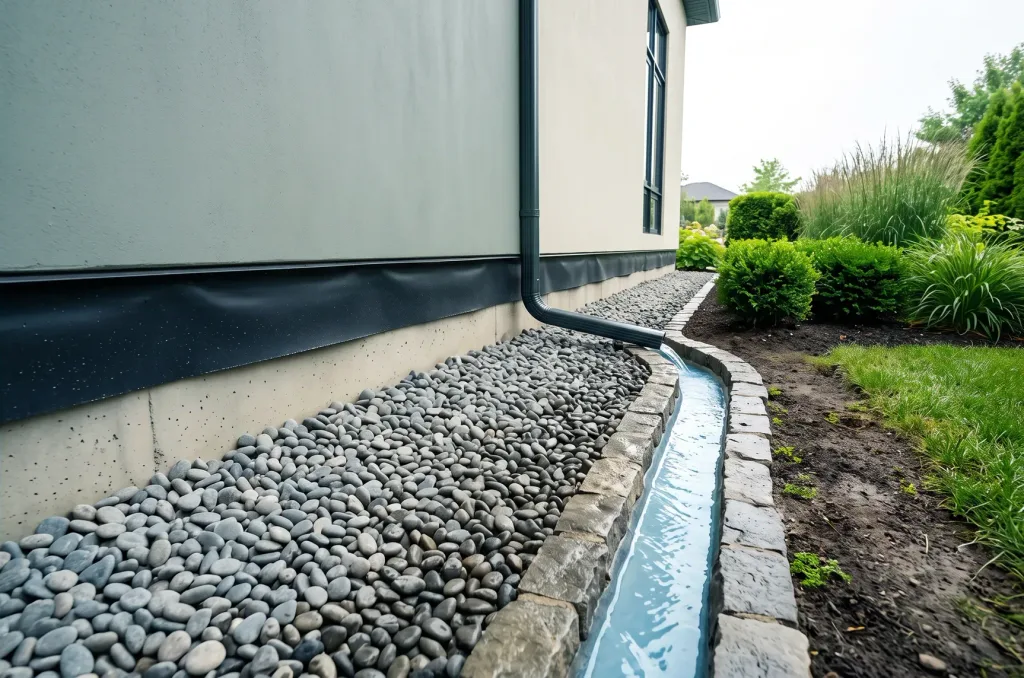
Basement Waterproofing in Richmond Hill, what we fix.
Basement leaks
Below-grade waterproofing
Sump pump installation
Balcony leaks
Terrace leaks
Underground parking waterproofing
Why our waterproofing actually holds.
Diagnose first
System-matched materials
Written warranties
Full documentation
Interior & exterior
Parking structure expertise
Diagnose first
We identify the actual entry point and failure mode before recommending a waterproofing system. The right system depends on the diagnosis.
System-matched materials
We specify and install waterproofing systems appropriate to the failure mode, not a one-size coating over everything.
Written warranties
Our waterproofing warranties are written, clearly explained before work begins, and transferable to future property owners.
Full documentation
Written inspection reports and completion documentation suitable for insurance, lenders, and reserve fund files.
Interior & exterior
We explain interior and exterior waterproofing options honestly, with the trade-offs, and recommend what's appropriate for your situation.
Parking structure expertise
Parking deck waterproofing, joint systems, and traffic membranes, commercial-grade capability applied to residential and commercial buildings.
“The right waterproofing system depends on what's actually failing. We find that out first.”
“The right waterproofing system depends on what's actually failing. We find that out first.”
Rated 5 out of 5Our neighbours recommended them for a valley repair. Small job, but they treated it like it mattered — showed up on time, matched the shingles perfectly, and charged exactly what they quoted.
Rated 5 out of 5Blue Knight was, by far, the best. Responsive, ethical, totally professional — and their crew went above and beyond at no extra charge.
Rated 5 out of 5They installed a full new roof in one day. The crew worked around the house without us hardly knowing they were there.
Our neighbours recommended them for a valley repair. Small job, but they treated it like it mattered — showed up on time, matched the shingles perfectly, and charged exactly what they quoted.
Blue Knight was, by far, the best. Responsive, ethical, totally professional — and their crew went above and beyond at no extra charge.
They installed a full new roof in one day. The crew worked around the house without us hardly knowing they were there.
I emailed at 4 a.m. and spoke with someone that same day. Estimate and completed work all within one day. Pricing was fair, work was excellent.
Luciano did not try to sell me a new roof. Appreciated the honesty — he showed up when he said he would.
We had a leak diagnosed by two other contractors who could not find the source. Blue Knight found it on the first visit and fixed it the same week.
Flat roof replacement on a commercial unit. Clean, fast, no surprises on the invoice. The crew left the site cleaner than they found it.
Called after a storm damaged our roof. Someone was on site within hours, tarped everything, and had us fully repaired before the next rain.
Had a slow basement leak for years. Every other company just caulked it. Blue Knight found the actual source and did a proper waterproofing job. No issues since.
Our Work.
Rooftops across the GTA.
From downtown Toronto to the 905 and beyond, one crew, one warranty, twenty-five years of GTA rooflines.
Service availability may vary. Call (647) 383-8664 to confirm coverage for your area.
Rooftops across the GTA.
From downtown Toronto to the 905 and beyond, one crew, one warranty, twenty-five years of GTA rooflines.
Service availability may vary. Call (647) 383-8664 to confirm coverage for your area.
Basement Waterproofing questions for Richmond Hill.
The unit prices are the same ranges across the city: $100 to $250 per linear foot for an interior system, $250 to $450 per linear foot for exterior excavation and membrane, and from around $400 for a single crack injection. What changes between Oak Ridges and the south end is which of those a house needs, since a moraine lot often calls for drainage and grading outside while a clay lot needs pressure taken off the wall, and either way the quote covers only the sections the diagnosis supports.
Possibly, and it changes the correct repair. On permeable moraine soil water travels rather than pooling, so a foundation sitting in its path takes a flow rather than sustained pressure. Where that is the cause the fix is often outside, with regrading, a swale to turn the water, and downspouts moved off the uphill side, all for far less than an interior system would cost, so it pays to diagnose before anyone proposes one.
If the crack is not structural and is actively letting water in, we inject it from inside with polyurethane or epoxy resin, which fills the path the water follows through the wall in a few hours of work. When pressure from saturated clay or movement in the ground is what keeps opening it, injection on its own just means a new crack next season, so we pair it with drainage work outside.
Yes. For the condo and commercial buildings along Yonge we inject cracks in the slab and walls, rebuild expansion joints, and apply membranes made to carry vehicle traffic on the parking deck. Boards need a reserve fund case before they can spend, so the report is written to go straight into one.
Plan on three to five days if a wall is being dug out and membraned from outside, since access and whatever turns up in the excavation set the pace. Work from inside is quicker, a few hours for crack injection and one to two days for an interior perimeter system, and we put the expected range in writing before starting rather than revising it halfway through.
Every system we install carries its own written warranty, and you receive it before the work begins. A resin injection, an interior perimeter drain, and an exterior membrane each carry different terms, and we explain yours in plain language at the start so its limits never come as a surprise.
The wall work itself does not change from one end of Richmond Hill to the other: excavate the failing section, clean the concrete, seal cracks and tie holes, swap the old damp proofing for a membrane that holds back standing water, and check the weeping tile before backfilling. What goes with it depends on the ground, with drainage to take pressure off the wall on the south end clay, and grading and water routing on the moraine to the north, where they often matter as much as the membrane. Exterior work of this kind costs $250 to $450 per linear foot, quoted wall by wall for the sections that need it.
Yes, for the problems that let water in, and many older south end houses have block foundations with exterior parging rather than the poured walls of the newer subdivisions, so they leak through cracked parging, open mortar joints, and the joint where the wall meets the footing. We seal those cracks and joints and, where the wall needs it, waterproof it from outside. Horizontal cracking or a wall that has moved inward is a structural matter, and we put that in writing with a recommendation for a structural assessment first.
Working out which kind of water you have, because here that changes the repair. The source might be groundwater arriving from the uphill side of a moraine lot, a window well, a tie hole, or a crack, and since we never quote over the phone, the visit ends with the diagnosis and an estimate, both in writing, plus dated photographs of what we found. Water coming in now is an emergency call, and we answer those around the clock.
Below grade, Richmond Hill is two municipalities. The south end around Langstaff, Doncrest, and North Richvale sits on the same slow draining ground as its neighbours, where water is held against foundations and finds cracks, cold joints, and tie holes under pressure. What the builders sprayed on those walls was damp proofing, which slows vapour from moist ground but was never meant to stand up to water pushing against it, and on streets built in the same few years it is now wearing out on roughly the same timetable.
The north end is different. Jefferson and Oak Ridges sit on or against the Oak Ridges Moraine, where more permeable soil moves groundwater through rather than holding it. Problems there are more often about where the water is travelling and where the house sits in its path than about pressure on a wall, and the fix frequently starts outside with grading and drainage.
Two Different Water Problems in One City
Telling moraine water from clay pressure is the whole job in Richmond Hill. Water held in the south end clay builds up through spring and long wet spells, comes in low at the base of the walls and along the slab edge, and only stops once the pressure has somewhere to go. Water moving through the northern sands peaks during a downpour and just after it, usually enters on the side of the house facing uphill, and is often solved by changes made outside the house.
The cost gap between those two answers runs to several thousand dollars on the same building. A contractor who sells a full interior system for a grading problem has not necessarily acted in bad faith, but the fault may still be there afterwards and you have paid for work it did not require.
What the Builders Called Waterproofing
Through the growth years, the standard foundation treatment in Richmond Hill was a sprayed bituminous coat applied by the builder. Against damp soil it did its job. Against water under hydrostatic pressure it was never going to hold, and on houses built in the 1990s and 2000s it is coming to the end of its working life on much the same schedule.
That makes a first leak in a twenty year old Richmond Hill basement a normal stage in the building's life, not a sign that the house was built badly or neglected since. The most useful thing an owner here can learn is that damp proofing and waterproofing are two different things, and that the coating on a growth era wall is the first of those, not the second.
Moraine Sand in the North, Older Foundations in the South
Much of Oak Ridges and Jefferson is built on moraine sand and gravel, and near Lake Wilcox and the smaller kettle lakes around it, groundwater stays close to the surface for most of the spring. The houses there are mostly newer, with deep basements, so a foundation can sit in or near groundwater during a wet season. Sumps run hard, window wells can fill from below as well as from above, and a failed pump or blocked weeping tile shows up quickly. Drainage and pumping capacity come first there, with the wall itself a second question.
The southern end is older. Richvale and the streets around Mill Pond hold some of the municipality's earlier housing, with foundations that predate the subdivision boom and have usually been through a basement finish or two since. There the leak is more likely to come through ageing block or early poured walls on slow draining clay, at cracks, mortar joints, and the base of the wall where water collects. That calls for sealing and, where the wall is failing broadly, exterior membrane, which is why a waterproofing quote in Richvale should look nothing like one in Oak Ridges.
We also cover nearby cities.
Ready to schedule your estimate?
We come to you, assess the roof, and give you a written quote. You are not obliged to proceed. Most estimates completed same week.