
Roof Repair in Leaside
Complex Leaside rooflines, original masonry interfaces, aging copper flashings, we diagnose and repair with care.
Roof Repair in Leaside, what we fix.
Roof leak repairs
Emergency tarping
Storm damage repair
Shingle repairs & replacement
Metal roofing
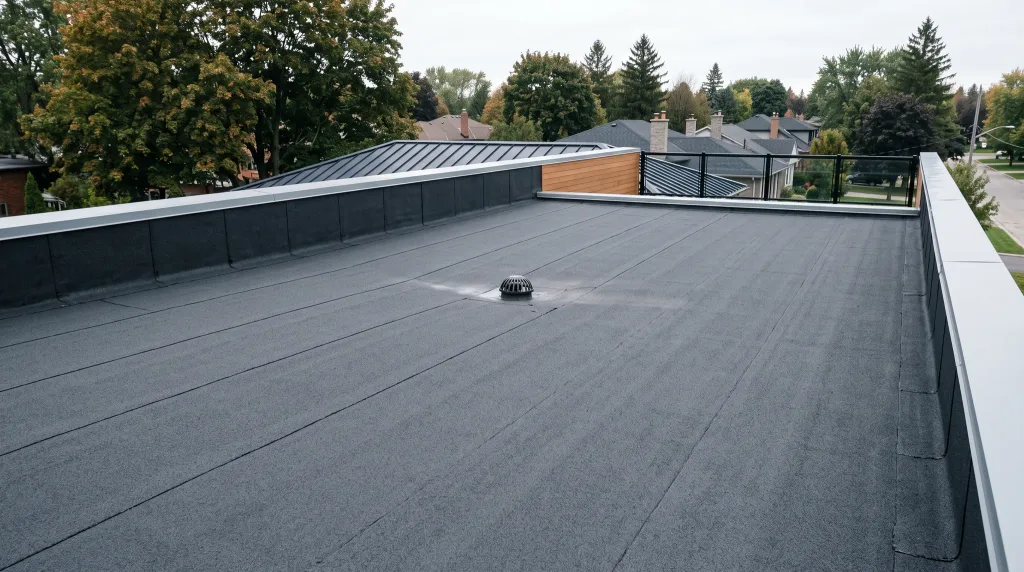
Flat roof repairs (EPDM, TPO, Mod-Bit)
Why Blue Knight finds it when others don't.
We trace first
Written reports
25+ years experience
No upsells
60-min emergency
Permanent repairs
We trace first
Every job starts with a full trace from interior stain back to the roof. We find the source before touching anything.
Written reports
You receive a written diagnostic report with photos, suitable for insurance, lenders, and property management files.
25+ years experience
Two and a half decades on GTA roofs means we've seen every failure mode across every building type in the region.
No upsells
We don't sell replacements when repairs are appropriate. Our invoice reflects what the building actually needs.
60-min emergency
Active leaks get same-day priority dispatch, around the clock, including nights and weekends.
Permanent repairs
We use manufacturer-matched materials and test the repair before we leave. No waiting for the next rain.
“We trace the leak from the stain back to the source. That's how leaks get fixed permanently.”
“We trace the leak from the stain back to the source. That's how leaks get fixed permanently.”
Rated 5 out of 5Blue Knight was, by far, the best. Responsive, ethical, totally professional — and their crew went above and beyond at no extra charge.
Rated 5 out of 5They installed a full new roof in one day. The crew worked around the house without us hardly knowing they were there.
Rated 5 out of 5I emailed at 4 a.m. and spoke with someone that same day. Estimate and completed work all within one day. Pricing was fair, work was excellent.
Blue Knight was, by far, the best. Responsive, ethical, totally professional — and their crew went above and beyond at no extra charge.
They installed a full new roof in one day. The crew worked around the house without us hardly knowing they were there.
I emailed at 4 a.m. and spoke with someone that same day. Estimate and completed work all within one day. Pricing was fair, work was excellent.
Luciano did not try to sell me a new roof. Appreciated the honesty — he showed up when he said he would.
We had a leak diagnosed by two other contractors who could not find the source. Blue Knight found it on the first visit and fixed it the same week.
Flat roof replacement on a commercial unit. Clean, fast, no surprises on the invoice. The crew left the site cleaner than they found it.
Called after a storm damaged our roof. Someone was on site within hours, tarped everything, and had us fully repaired before the next rain.
Had a slow basement leak for years. Every other company just caulked it. Blue Knight found the actual source and did a proper waterproofing job. No issues since.
Our neighbours recommended them for a valley repair. Small job, but they treated it like it mattered — showed up on time, matched the shingles perfectly, and charged exactly what they quoted.
Our Work.
Rooftops across the GTA.
From downtown Toronto to the 905 and beyond, one crew, one warranty, twenty-five years of GTA rooflines.
Service availability may vary. Call (647) 383-8664 to confirm coverage for your area.
Rooftops across the GTA.
From downtown Toronto to the 905 and beyond, one crew, one warranty, twenty-five years of GTA rooflines.
Service availability may vary. Call (647) 383-8664 to confirm coverage for your area.
Roof Repair questions for Leaside.
Yes. Where original copper flashing is still sound we repair it, and where it has worn through we form and install new copper to match the original profile. Copper should not sit in contact with galvanized steel or aluminium, so we check what other metals are on the roof before any new piece goes in.
Yes. We replace broken or slipped slates one at a time, matching size, thickness, and colour as closely as the stone allows, and secure them with copper so the repair lasts as long as the slate around it. On Leaside houses slate is usually a porch, bay, or dormer rather than the whole roof, which makes a careful match all the more visible.
We plan material staging to avoid landscaping, use drop cloths, and clean up thoroughly. We take this seriously.
Always, and never by phone. We look at the roof first, trace the leak to its source, and then give you a written estimate setting out what failed, what we propose to do about it, and what it will cost, with dated photos so you can see the problem for yourself before you decide.
2 to 3 days for most Leaside homes, depending on size and complexity. A house with an addition, a flat section, or chimneys that need their flashing rebuilt takes longer, and if sheathing has to be replaced once the old layers are off, the written estimate explains how that affects the schedule.
Because that junction is the hardest detail on the whole roof and it is usually the one done in the greatest hurry. When an addition was built the new roof had to be tied into existing wall or roof, and the correct detail is step flashing woven into the courses with counterflashing let into the masonry above it. What frequently happened instead was a run of sealant or a strip of membrane surface-mounted over the joint. That holds for a few years, then the two structures move against each other through a winter and it opens. Repairing it properly means taking the covering back on both sides and rebuilding the flashing rather than resealing the surface.
You have to maintain it or remove it, because doing neither is what causes the leak. An unused masonry chimney no longer gets warmed and dried by flue gas, so it holds moisture, the mortar joints deteriorate faster, and the freeze thaw cycles take the joints apart from the top down. Once those joints go, the counterflashing set into them has nothing to grip and water enters at the roof line. On a Leaside house where a chimney serves nothing, taking it down to below the roof line and closing the opening properly is often cheaper than repointing, recapping, and reflashing something you will never use.
Two is the practical and code limit, and on most of these houses the honest answer is that the next roof should be a strip rather than an overlay. Many Leaside homes are on their second or third covering, and each layer added weight, buried the condition of the deck, and made every flashing detail sit progressively higher and shallower relative to the surface. Stripping to the deck costs more up front. It is also the one point at which the boards can be inspected, the flashing reset at the right height, and self-adhering membrane run along the eaves and down each valley.
Less by falling on it than by filling it. Leaside's canopy of mature maples and oaks drops a heavy load of leaf litter and seed into valleys and behind chimneys every autumn. That debris keeps the valley soaked for days after a storm, and once winter arrives it turns into a frozen barrier that forces meltwater back beneath the shingles. The damage looks like a roofing failure and is really a drainage failure. Overhanging limbs also abrade the surface with every wind, which wears the granule off a slope years early.
Yes, and on this housing stock they come up constantly. Rear additions, dormer cheeks, porch roofs, and second storey extensions frequently include a low sloped or flat section, and a flat roof membrane fails on a completely different schedule from the sloped roof it adjoins. For a porch, bay, or small addition whose pitch is too low for shingles, a metal roof is often the better choice, and we install it. The junction between the flat or metal section and the adjacent slope is another detail we expect to inspect closely.
Leaside's 1920s to 1940s homes have rooflines with multiple slopes, valleys, dormers, and chimney intersections. These buildings reward careful diagnostic work, the leak you're seeing on a ceiling can originate from any of several points on a complex roofline.
Leaside also has a roofing problem that is specific to how the neighbourhood has changed. More of these houses have been extended than not, whether a rear addition, a second storey, or a converted garage, and every one of those projects created a junction where an original roof meets newer construction. Those tie-ins are where we find the majority of persistent Leaside leaks. Two structures built decades apart settle at different rates and move differently through freeze thaw cycles, and the step flashing at the joint between them is asked to absorb that movement for decades.
The second recurring issue is the chimneys. Most Leaside houses were built with masonry chimneys serving oil or coal, and after conversion to gas a great many of them were left standing, unused and unheated. An abandoned chimney stops drying itself out, the mortar joints erode, and the counterflashing that was let into those joints loses its anchorage. We trace methodically and fix permanently, which sometimes means recommending removal of a chimney that no longer does anything except admit water.
Roof Repair on Leaside's Interwar Homes
Leaside's 1920s to 1940s construction produced homes with quality masonry and complex rooflines that deserve careful repair rather than quick fixes. We approach these buildings with diagnostic rigour and material care.
When copper flashings are original and restorable, we restore them. When slate needs specialist attention, we provide it. And when the correct answer is that a slope has had its last overlay and needs stripping to the deck, we set that out with the reasoning rather than selling another layer that hides the problem for five years.
Where the Old House Meets the New Addition
Leaside has been renovated more heavily than almost any comparable Toronto neighbourhood, and that history is written into its roofs. Rear additions, second storey builds, garage conversions, and enlarged dormers have all left junctions where original 1930s framing meets construction from the 1990s or later.
These tie-ins fail more often than anything in the open field of the roof, for a structural reason rather than a workmanship one. The two halves of the building sit on different foundations, carry different loads, and respond differently to seasonal movement. The flashing across that joint has to accommodate differential movement year after year, and a detail that was surface-sealed instead of properly woven and let in will eventually open.
When we trace a recurring Leaside leak, the addition junction is one of the first places we look. Repairing it means opening the covering back on both sides, rebuilding step flashing into the courses, letting counterflashing into a sound mortar joint, and adding membrane beneath the finished surface at the transition. It is more work than a bead of sealant and it is the version that stops the leak returning.
Abandoned Chimneys and Masonry Interfaces
Nearly every original Leaside house was built with at least one masonry chimney, and a large share of them no longer serve anything after decades of heating conversions. Those disused stacks are a common and under-recognised source of water infiltration.
A working chimney stays relatively warm and dry. An abandoned one absorbs and holds moisture, so its mortar joints erode faster and the freeze thaw cycle progressively opens them. Chimney flashing failure follows, because counterflashing depends on being cut into a sound joint. Water then enters behind the metal and runs down inside the wall cavity, often emerging on a ceiling some distance from the chimney itself.
We assess the masonry and the flashing together, because repairing one without the other does not last. Depending on the condition and whether the chimney has any remaining function, the recommendation may be repointing, a new cap and reflashing, or taking the stack down below the roof line and closing it properly. We explain the cost and the lifespan of each so the decision is yours.
Why Leaside Roofing Requires Specialist Care
The properties in Leaside are among Toronto's most carefully maintained residential homes. Owners invest in quality. They expect the same from contractors, and we deliver it.
Written proposals, careful execution, clean sites. In practice the part Leaside owners notice most is the site discipline. These are generous lots with established gardens, mature specimen trees, and hard landscaping that costs real money to reinstate, all of it immediately beside the work. Staging, debris routes, and protection get agreed before anything comes off the roof rather than improvised on the morning.
We also cover nearby cities.
Ready to schedule your estimate?
We come to you, assess the roof, and give you a written quote. You are not obliged to proceed. Most estimates completed same week.