
Basement Waterproofing in Thornhill
Thornhill foundations were damp proofed rather than waterproofed, and thirty years on that coating has done everything it was ever going to do.
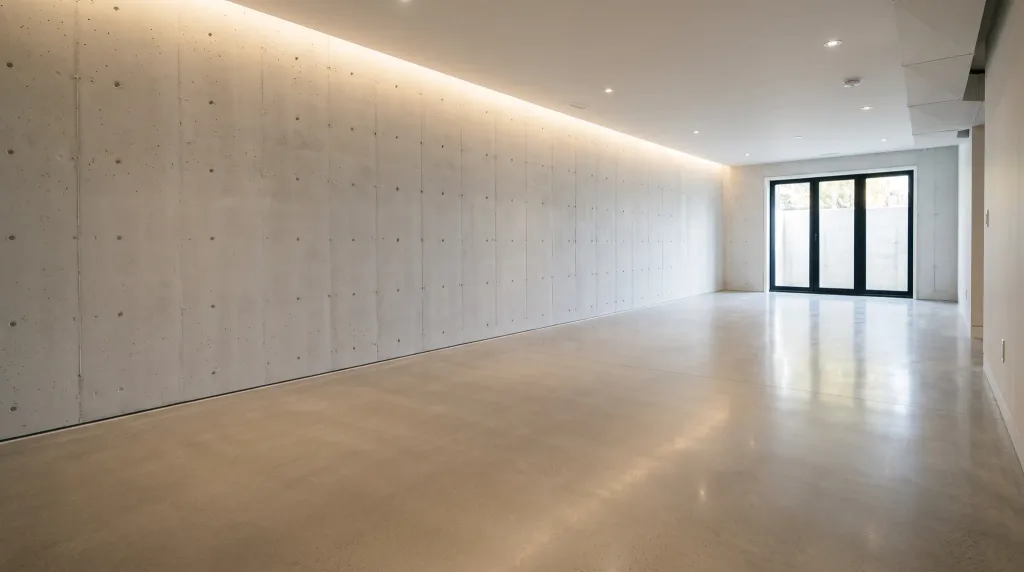
Basement Waterproofing in Thornhill, what we fix.
Basement leaks
Below-grade waterproofing
Sump pump installation
Balcony leaks
Terrace leaks
Underground parking waterproofing
Why our waterproofing actually holds.
Diagnose first
System-matched materials
Written warranties
Full documentation
Interior & exterior
Parking structure expertise
Diagnose first
We identify the actual entry point and failure mode before recommending a waterproofing system. The right system depends on the diagnosis.
System-matched materials
We specify and install waterproofing systems appropriate to the failure mode, not a one-size coating over everything.
Written warranties
Our waterproofing warranties are written, clearly explained before work begins, and transferable to future property owners.
Full documentation
Written inspection reports and completion documentation suitable for insurance, lenders, and reserve fund files.
Interior & exterior
We explain interior and exterior waterproofing options honestly, with the trade-offs, and recommend what's appropriate for your situation.
Parking structure expertise
Parking deck waterproofing, joint systems, and traffic membranes, commercial-grade capability applied to residential and commercial buildings.
“The right waterproofing system depends on what's actually failing. We find that out first.”
“The right waterproofing system depends on what's actually failing. We find that out first.”
Rated 5 out of 5Blue Knight was, by far, the best. Responsive, ethical, totally professional — and their crew went above and beyond at no extra charge.
Rated 5 out of 5They installed a full new roof in one day. The crew worked around the house without us hardly knowing they were there.
Rated 5 out of 5I emailed at 4 a.m. and spoke with someone that same day. Estimate and completed work all within one day. Pricing was fair, work was excellent.
Blue Knight was, by far, the best. Responsive, ethical, totally professional — and their crew went above and beyond at no extra charge.
They installed a full new roof in one day. The crew worked around the house without us hardly knowing they were there.
I emailed at 4 a.m. and spoke with someone that same day. Estimate and completed work all within one day. Pricing was fair, work was excellent.
Luciano did not try to sell me a new roof. Appreciated the honesty — he showed up when he said he would.
We had a leak diagnosed by two other contractors who could not find the source. Blue Knight found it on the first visit and fixed it the same week.
Flat roof replacement on a commercial unit. Clean, fast, no surprises on the invoice. The crew left the site cleaner than they found it.
Called after a storm damaged our roof. Someone was on site within hours, tarped everything, and had us fully repaired before the next rain.
Had a slow basement leak for years. Every other company just caulked it. Blue Knight found the actual source and did a proper waterproofing job. No issues since.
Our neighbours recommended them for a valley repair. Small job, but they treated it like it mattered — showed up on time, matched the shingles perfectly, and charged exactly what they quoted.
Our Work.
Rooftops across the GTA.
From downtown Toronto to the 905 and beyond, one crew, one warranty, twenty-five years of GTA rooflines.
Service availability may vary. Call (647) 383-8664 to confirm coverage for your area.
Rooftops across the GTA.
From downtown Toronto to the 905 and beyond, one crew, one warranty, twenty-five years of GTA rooflines.
Service availability may vary. Call (647) 383-8664 to confirm coverage for your area.
Basement Waterproofing questions for Thornhill.
It depends on how much of the wall is involved, with a single injected crack starting around $400. An interior drainage system along the inside of the footing is priced at $100 to $250 for every linear foot treated, and digging out the exterior to membrane the wall is $250 to $450 for every linear foot. On most Thornhill houses the diagnosis points to one or two walls rather than all four, and the written quote prices only those.
Neither is better in general, because they answer different faults. Working from outside wraps the wall in a membrane and gives the water a drained route away, which is the fuller answer when clay backfill is holding water against the foundation, but it means digging up the side yard and whatever is planted in it. An inside system intercepts water after it has come through, costs less, and leaves the garden alone, and we tell you which fault your house actually has before recommending either.
Sealing a single crack by injection normally takes a few hours. An interior drainage run takes one to two days, and an exterior dig on a Thornhill house takes three to five working days, longer where a driveway, a deck, or a side yard fence has to come out first. You get that working estimate in writing before we start, so the timeline does not shift halfway through.
Yes. The condo and office buildings clustered around Commerce Valley and along Highway 7 sit over underground garages, and we work on their traffic bearing membranes, expansion joints, and leaking cracks in the slabs and walls. Because a condo board has to approve the spending before anything happens, our reports are written for a reserve fund study rather than for a homeowner.
A written one, tied to the specific system we install and given to you before the job starts. A crack injection, an interior drainage run, and an exterior membrane are each covered on different terms, and we walk through the limits of each with you at quoting so there is nothing to discover later.
Foundation cracks that have opened as backfill settled, window wells without functioning drains, and grading that has shifted toward the house over three decades so that surface water now arrives at the wall. The last two are cheap to fix and are checked before anybody talks about a system.
On 1980s and 90s construction it is usually perforated plastic rather than clay, which is better news than owners of older housing get, but it is still thirty years into a life spent surrounded by settling backfill and tree roots. It can be scoped by camera where there is an accessible cleanout. What we typically find is partial blockage from silt or root intrusion rather than outright collapse, and that matters because a system relying on a compromised line will underperform no matter how well it is installed.
It is the first thing we look at and one of the most frequent findings, because a downspout emptying within a foot or two of the wall delivers the entire roof volume to the foundation during every storm, exactly the load the drainage was meant to be spared. Extending the discharge well clear of the building, and confirming it is not simply running back along settled grading, is inexpensive and occasionally resolves the problem outright. Where a downspout has been tied directly into the drainage line, disconnecting it is the priority.
If the recommendation is an interior system then yes, because an interior system works by collecting water and discharging it, which requires a pump. The failure mode worth planning for is that storms and power interruptions arrive together, so on a finished basement we specify battery backup or a water powered secondary as a matter of course. A pump with no redundancy protecting a finished lower level is a single point of failure in the exact conditions it exists for.
It depends on the system and we tell you before the work rather than after. Transfer terms are not the same for an injected crack, an inside drainage system, and an outside membrane, and they matter at resale, because a buyer's lawyer will usually ask whether the below grade work comes with paperwork the new owner can rely on. We hand over the written terms and the completion documentation together so the file is complete if the house changes hands.
Most wet basements in Thornhill trace back to one line in the original builder's specification. The subdivision foundations poured on both sides of Yonge in the 1980s and 90s were sprayed with a bituminous damp proofing coat, which keeps ordinary soil moisture out of the concrete and was never meant to do more. Holding back water that stands against the wall and presses on it was not part of its job, and the heavy clay under most of Thornhill eventually puts it in exactly that position.
The consequence is that whole streets arrive at the same point together, thirty years after everybody moved in. Neighbours on the same Thornhill crescent each tend to believe their own house has a fault nobody else has. Usually it does not, and the useful question is not what went wrong but which of the cheap explanations has been ruled out before anybody proposes a system.
Why the Ground Here Holds Water
The soil across much of York Region is heavy clay, and that single fact explains most of what happens to Thornhill basements. Clay has very low permeability, so water moving down through the backfill around a foundation reaches it and then stops rather than draining away into the surrounding ground.
The result is that the backfill zone against the wall behaves like a reservoir during and after heavy rain. Water accumulates there, and because it cannot disperse sideways it exerts hydrostatic pressure against the wall and the footing until the drainage system can move it. That is precisely the load a sprayed damp proofing coating was never specified to resist, and it is why the same coating that performed adequately for twenty five years starts admitting water once a crack opens or the coating degrades.
Clay also shrinks and swells with moisture content, which is what drives the seasonal movement that opens cracks in the first place. Understanding this changes the recommendation in a useful direction: on slow draining ground, relieving the water and giving it a route out is generally more durable than attempting to seal a wall against sustained pressure, which is why we lean toward drainage as part of any system we install here.
Why Whole Streets Arrive at This Together
The pattern that puzzles Thornhill owners most is that their neighbours are having the same conversation in the same year. It is not coincidence and it is not a defective street. The subdivisions went in over a short period, the same builders used the same below grade specification throughout, and that specification has a service life. Thirty years later it reaches the end of it across the whole development at once.
This matters because of how it changes the appropriate response to the first quote. A leak that is a predictable maintenance event on ageing damp proofing does not necessarily justify a full perimeter system, and the fact that a neighbour had one installed is not evidence that you need one. Different houses on the same street arrive here through different mechanisms: one has a settled grade, another a blocked window well drain, a third a genuine crack under hydrostatic load.
We diagnose the specific mechanism at your address and quote only the sections the diagnosis supports, which on most properties is considerably less than the full perimeter.
Check the Cheap Explanations First
Before anyone prices a system, two inexpensive faults need ruling out. The first is a window well with no working drain: in a downpour it fills like a bucket and leaves water standing against a basement window built to shed rain, not to sit in it. The second is grading that has sunk over thirty years until it tips toward the house, sending roof runoff and surface water to the one place it was supposed to be steered away from.
Both turn up regularly on Thornhill houses of this age, and both are cheap to put right. When one of them explains the water, the fix is an afternoon of work rather than a system costing several thousand dollars, so we give the outside of the house as much of the assessment time as the basement gets.
Damp Proofing Is Not Waterproofing
If you own a Thornhill house from the 1980s or 90s, this is the one distinction worth understanding about your foundation. Damp proofing is a coating that slows vapour and resists soil moisture. Waterproofing resists standing water under pressure. Builders applied the first and homeowners were told the second.
That is why a first leak in a thirty year old Thornhill basement normally means the coating has reached the end of its service life, not that the house was neglected or badly built. Knowing that changes how you should respond to the first quote that arrives, which is frequently for a full perimeter system the fault does not require.
We also cover nearby cities.
Ready to schedule your estimate?
We come to you, assess the roof, and give you a written quote. You are not obliged to proceed. Most estimates completed same week.